Showing posts with label text-to-image. Show all posts

2.23.2024

The Release of Stable Diffusion 3

In the rapidly evolving world of artificial intelligence and generative art, the release of Stable Diffusion 3 marks a significant milestone. This iteration not only advances the capabilities of AI in creating high-resolution, intricate images from textual descriptions but also addresses ethical considerations and improves accessibility for creators worldwide.

Stable Diffusion, a project by Stability AI, has been at the forefront of text-to-image generation, enabling users to bring their imaginative prompts to life. Each version of Stable Diffusion has introduced improvements in image quality, resolution, and generation speed, making it a favorite tool among digital artists, designers, and developers.
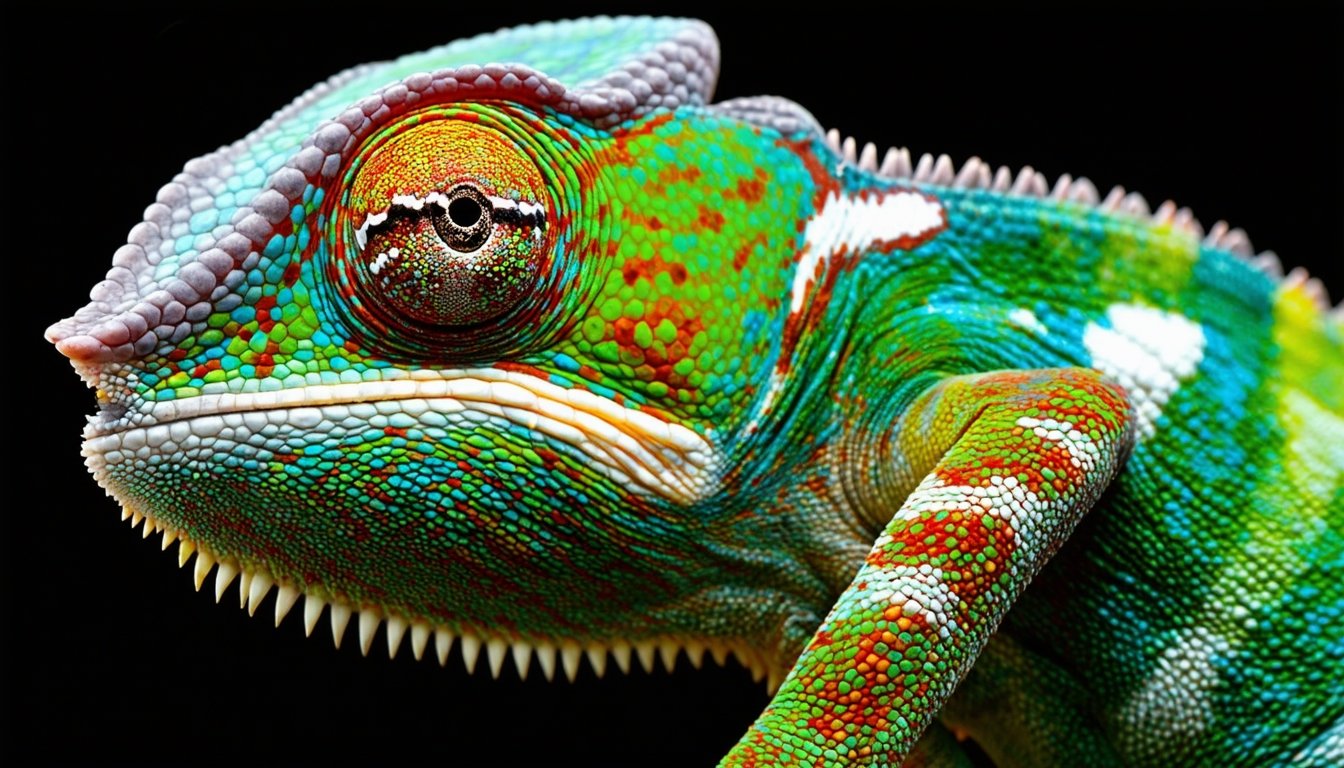
The release of Stable Diffusion 3, or Stable Diffusion XL 1.0 as it's referred to, is described as the "most advanced" version to date by Stability AI. It boasts a model containing 3.5 billion parameters, capable of producing full 1-megapixel resolution images in mere seconds across multiple aspect ratios. This represents a significant leap from its predecessor, offering more vibrant colors, better contrast, and enhanced shadows and lighting​​.

One of the key advancements in Stable Diffusion 3 is its improved text generation capability. Unlike previous versions, which struggled with generating images containing legible text, logos, or calligraphy, this version excels in "advanced" text generation and legibility. It also supports inpainting, outpainting, and image-to-image prompts, allowing for more detailed variations of pictures with simpler natural language processing prompting​​.

Stability AI has made this technology open source, available on GitHub in addition to its API and consumer apps, ClipDrop and DreamStudio. This move aligns with the company's commitment to democratizing AI technology, enabling a broader range of users to experiment with and build upon Stable Diffusion 3​​.

However, the release of such powerful models raises ethical questions, particularly concerning the potential for misuse in creating nonconsensual content or deepfakes. Stability AI has taken steps to mitigate these risks by filtering the model's training data for unsafe imagery and incorporating safeguards against harmful content generation. Moreover, the model's training set includes artwork from artists who have protested the use of their work as training data for AI models, reflecting the ongoing dialogue between AI developers and the creative community​​.

Stable Diffusion 3 is not just a tool for generating images; it is a platform for creativity, innovation, and ethical AI development. Its release invites artists, developers, and researchers to explore new horizons in digital creation while navigating the complex ethical landscape of generative AI technology.

As we look to the future, the potential applications of Stable Diffusion 3 are vast, from enhancing creative workflows to developing new forms of digital content. The conversation around its use and impact is just beginning, and it promises to shape the trajectory of AI and art for years to come.

2.15.2024

Stable Cascade: Revolutionizing the AI Artistic Landscape with a Three-Tiered Approach


In the rapidly evolving domain of AI-driven creativity, Stability AI has once again broken new ground with the introduction of Stable Cascade. This trailblazing model is not just a mere increment in their series of innovations; it represents a paradigm shift in text-to-image synthesis. Built upon the robust foundation of the Würstchen architecture, Stable Cascade debuts with a research preview that is set to redefine the standards of AI art generation.


A New Era of AI Efficiency and Quality

Stable Cascade emerges from the shadows of its predecessors, bringing forth a three-stage model that prioritizes efficiency and quality. The model's distinct stages—A, B, and C—work in a symphonic manner to transform textual prompts into visually stunning images. With an exemplary focus on reducing computational overhead, Stable Cascade paves the way for artists and developers to train and fine-tune models on consumer-grade hardware—a feat that once seemed a distant dream.


The Technical Symphony: Stages A, B, and C

Each stage of Stable Cascade has a pivotal role in the image creation process. Stage C, the Latent Generator, kicks off the process by translating user inputs into highly compressed 24x24 latents. These are then meticulously decoded by Stages A and B, akin to an orchestra interpreting a complex musical composition. This streamlined approach not only mirrors the functionality of the VAE in Stable Diffusion but also achieves greater compression efficiency.


Democratizing AI Artistry

Stability AI's commitment to democratizing AI extends to Stable Cascade's training regime. The model's architecture allows for a significant reduction in training costs, providing a canvas for experimentation that doesn't demand exorbitant computational resources. With the release of checkpoints, inference scripts, and tools for finetuning, the doors to creative freedom have been flung wide open.


Bridging the Gap between Art and Technology

Stable Cascade's modular nature addresses one of the most significant barriers to entry in AI art creation: hardware limitations. Even with a colossal parameter count, the model maintains brisk inference speeds, ensuring that the creation process remains fluid and accessible. This balance of performance and efficiency is a testament to Stability AI's forward-thinking engineering.


Beyond Conventional Boundaries

But Stable Cascade isn't just about creating art from text; it ventures beyond, offering features like image variation and image-to-image generation. Whether you're looking to explore variations of an existing piece or to use an image as a starting point for new creations, Stable Cascade provides the tools to push the boundaries of your imagination.


Code Release: A Catalyst for Innovation

The unveiling of Stable Cascade is accompanied by the generous release of training, finetuning, and ControlNet codes. This gesture not only underscores Stability AI's commitment to transparency but also invites the community to partake in the evolution of this model. With these resources at hand, the potential for innovation is boundless.


Conclusion: A New Frontier for Creators

Stable Cascade is not just a new model; it's a beacon for the future of AI-assisted artistry. Its release marks a momentous occasion for creators who seek to blend the art of language with the language of art. Stability AI continues to chart the course for a future where AI and human creativity coalesce to create not just images, but stories, experiences, and realities previously unimagined.

9.24.2023

Unlocking Creative Horizons: DALL-E 3's Integration with ChatGPT and Enhanced Safety Measures


OpenAI’s DALL-E 3: The Next Evolution in Generative AI Visual Art

OpenAI has once again made a groundbreaking move in the realm of AI-driven art with the announcement of DALL-E 3, the third iteration of its generative AI visual art platform. With DALL-E’s proven capability to convert text prompts into artful images, this new version promises enhanced contextual understanding and user-friendly features.


What’s New with DALL-E 3?

One of the most exciting updates is the seamless integration of DALL-E 3 with ChatGPT. This feature allows users to leverage ChatGPT for generating detailed prompts, a task that could previously be a hurdle for those not adept at crafting specific prompts. By initiating a dialogue with ChatGPT, users can have the chatbot craft a descriptive paragraph which DALL-E 3 then interprets into creative visuals.

A striking demo was showcased to The Verge where Aditya Ramesh, the spearhead of the DALL-E team, used ChatGPT to brainstorm a logo for a hypothetical ramen restaurant situated in the mountains. The result? An imaginative art piece featuring a mountain adorned with ramen-inspired snowcaps, a broth-resembling waterfall, and pickled eggs artistically presented as garden stones. While the output was more artistic merch than a traditional logo, it exemplifies the innovative potential of DALL-E 3.


DALL-E’s Evolution: A Brief Look Back

The inception of DALL-E dates back to January 2021, pioneering the field before its counterparts like Stability AI and Midjourney. As DALL-E 2 emerged in 2022, OpenAI addressed certain concerns by introducing a waitlist system to regulate its access, primarily due to potential content biases and explicit image generations. The platform later became publicly accessible in September of the same year.

Now, with DALL-E 3, OpenAI is planning a phased release, initially rolling it out to ChatGPT Plus and ChatGPT Enterprise users, with research labs and API service access to follow in the fall. As of now, a timeline for a free public version remains under wraps.


Safety Enhancements in DALL-E 3

Amid the advancements, safety remains paramount. OpenAI has fortified DALL-E 3 with robust safety measures, rigorously tested by external red teamers. One notable advancement is the implementation of input classifiers designed to screen out explicit or potentially harmful prompts. Another significant upgrade ensures the inability to reproduce images of public figures when their names are explicitly mentioned in the prompt.

Sandhini Agarwal, OpenAI's policy researcher, expressed strong belief in these safety measures but also reminded users that continuous improvement is underway and perfection is still a work in progress.

Additionally, in response to concerns from the artist community, DALL-E 3 comes with an in-built ethical code: it won't attempt to recreate art in the style of living artists. OpenAI is also offering artists the option to prevent their art from being used in future AI iterations by allowing them to request removal of specific copyrighted images.

This move comes in light of legal challenges faced by DALL-E's competitors, Stability AI and Midjourney, and art platform DeviantArt, which were sued by artists alleging copyright infringements.


In Conclusion

DALL-E 3 stands as a testament to OpenAI's commitment to innovation, accessibility, and ethics in the ever-evolving domain of AI-generated art. As we await its broader release, the art and tech community watches with anticipation, eager to explore the limitless horizons that DALL-E 3 promises.